7-Day High Protein Meal Plan (With Protein Totals for Every Day)
This high protein meal plan gives you seven days of breakfast, lunch, dinner and a snack, and every day lands between 100 and 108 grams of protein. That fits the 2025–2030 Dietary Guidelines range for a 150 lb adult and sits inside the range the International Society of Sports Nutrition (ISSN) suggests for people who train. Each meal has about 21 to 34 grams, and the protein numbers come from USDA FoodData Central.
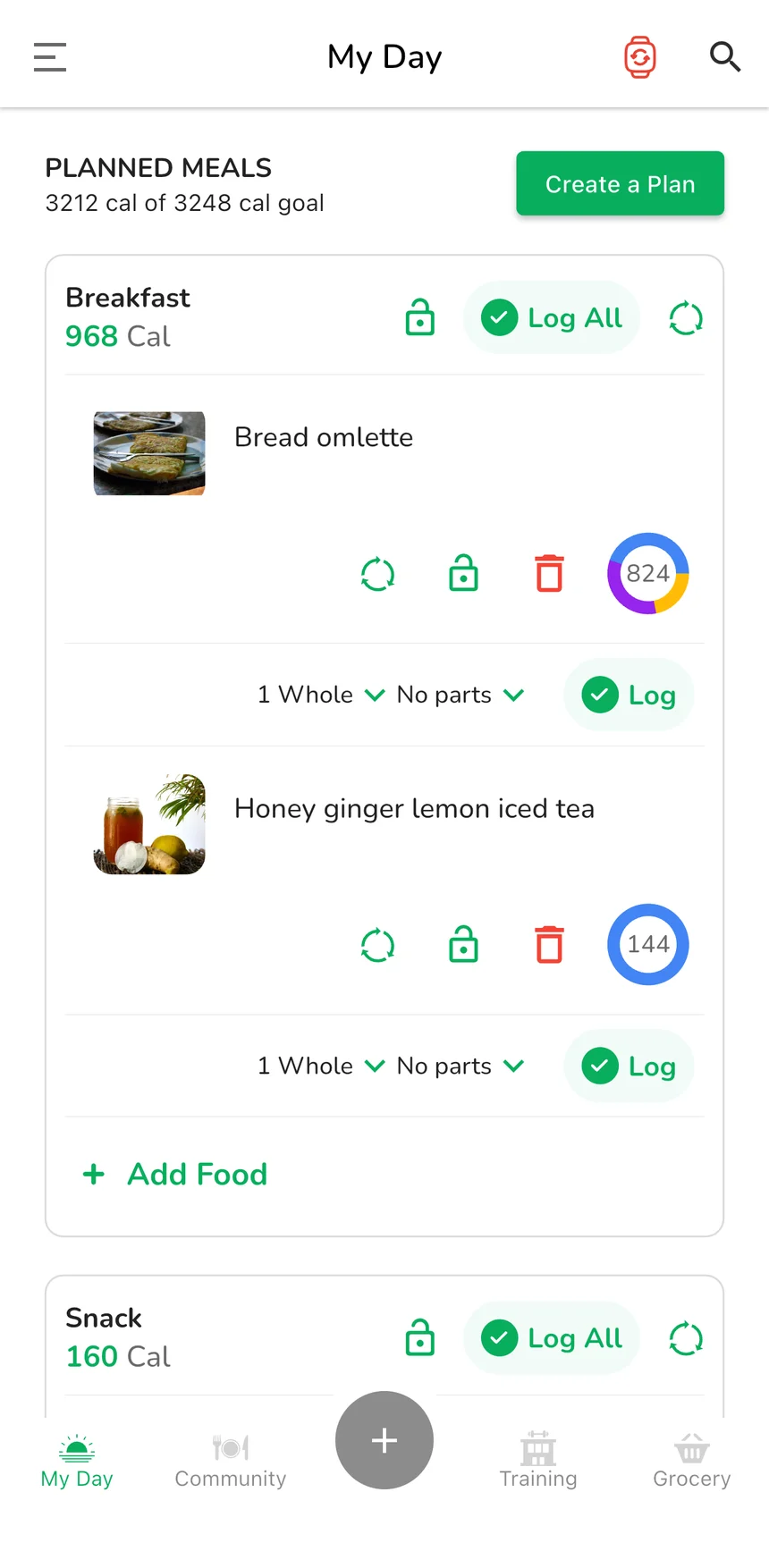
The plan reuses the same few cooked proteins across the week, so you cook twice (Sunday and Wednesday) and the leftovers never sit in the fridge past USDA's three-to-four-day limit.
How much protein should you eat a day?
Three reference points set the target, all scaled to body weight:
- The RDA from the National Academies is 0.8 g per kilogram of body weight a day. It's the minimum that covers basic needs for most healthy adults.
- The 2025–2030 Dietary Guidelines for Americans recommend 1.2 to 1.6 g/kg a day, with protein at every meal.
- The ISSN position stand puts people who exercise regularly at 1.4 to 2.0 g/kg a day, in meals of roughly 20 to 40 grams spread every three to four hours.
For four body weights, the ranges come out like this:
| Body weight | Dietary Guidelines (1.2–1.6 g/kg) | ISSN, active adults (1.4–2.0 g/kg) |
|---|---|---|
| 120 lb (54 kg) | 65–87 g a day | 76–109 g a day |
| 150 lb (68 kg) | 82–109 g a day | 95–136 g a day |
| 180 lb (82 kg) | 98–131 g a day | 114–163 g a day |
| 210 lb (95 kg) | 114–152 g a day | 133–191 g a day |
The plan below is written for the 150 lb row. If you're heavier or train hard, scale the protein portions up (4 or 5 oz of chicken instead of 3) or add a second snack. If you're lighter, the snacks are the easiest thing to trim. If you have kidney disease or another medical condition, talk to your doctor or a registered dietitian before you raise your protein intake.
The 7-day high protein meal plan
The totals count the protein foods and grains in each meal. Vegetables, sauces and fruit add a few more grams that aren't counted, so your real number will be slightly higher. Portions use the cooked weight.
| Day | Breakfast | Lunch | Dinner | Snack | Protein |
|---|---|---|---|---|---|
| Mon | Greek yogurt and cottage cheese pot (29 g) | Chicken burrito bowl (34 g) | Salmon with quinoa (31 g) | String cheese and almonds (13 g) | 107 g |
| Tue | Oatmeal with peanut butter and a glass of milk (21 g) | Chicken burrito bowl (34 g) | Turkey and bean chili (31 g) | Greek yogurt (17 g) | 103 g |
| Wed | Three scrambled eggs on toast (23 g) | Turkey and bean chili (31 g) | Tofu and edamame stir-fry (31 g) | Cottage cheese with fruit (24 g) | 108 g |
| Thu | Greek yogurt and cottage cheese pot (29 g) | Tofu and edamame stir-fry (31 g) | Garlic shrimp with quinoa (29 g) | Tuna on cucumber slices (17 g) | 105 g |
| Fri | Oatmeal with peanut butter and a glass of milk (21 g) | Tuna and chickpea salad (31 g) | Pork tenderloin with quinoa (30 g) | Greek yogurt (17 g) | 100 g |
| Sat | Three scrambled eggs on toast (23 g) | Pork, bean and rice bowl (30 g) | Turkey and bean chili from the freezer (31 g) | Greek yogurt and almonds (23 g) | 107 g |
| Sun | Greek yogurt and cottage cheese pot (29 g) | Edamame and egg grain bowl (31 g) | Salmon and lentil plate (31 g) | Hummus and string cheese (9 g) | 101 g |
What's in each meal
These are the portions behind the numbers. Protein values are from USDA FoodData Central, rounded to one decimal.
| Meal | Protein portions | Protein |
|---|---|---|
| Yogurt and cottage cheese pot | 170 g nonfat Greek yogurt (17.3 g) + ½ cup 2% cottage cheese (11.8 g) | 29.1 g |
| Chicken burrito bowl | 3 oz roasted chicken breast (26.4 g) + ½ cup black beans (7.6 g) | 34.0 g |
| Salmon with quinoa | 3 oz cooked sockeye salmon (22.5 g) + 1 cup cooked quinoa (8.1 g) | 30.6 g |
| Oatmeal breakfast | 1 cup cooked oats (5.9 g) + 2 tbsp peanut butter (7.1 g) + 1 cup 2% milk (8.1 g) | 21.1 g |
| Turkey and bean chili | 3 oz cooked 93/7 ground turkey (23.0 g) + ½ cup black beans (7.6 g) | 30.6 g |
| Eggs on toast | 3 large eggs (18.9 g) + 1 slice whole-wheat bread (4.0 g) | 22.9 g |
| Tofu and edamame stir-fry | ½ cup firm tofu (21.8 g) + ½ cup edamame (9.3 g) | 31.1 g |
| Garlic shrimp with quinoa | 3 oz cooked shrimp (20.4 g) + 1 cup cooked quinoa (8.1 g) | 28.5 g |
| Tuna and chickpea salad | 3 oz light tuna in water (16.5 g) + 1 cup chickpeas (14.5 g) | 31.0 g |
| Pork tenderloin with quinoa | 3 oz roasted pork tenderloin (22.3 g) + 1 cup cooked quinoa (8.1 g) | 30.4 g |
| Pork, bean and rice bowl | 3 oz pork tenderloin (22.3 g) + ½ cup black beans (7.6 g) | 29.9 g |
| Edamame and egg grain bowl | 1 cup edamame (18.5 g) + 2 hard-cooked eggs (12.6 g) | 31.1 g |
| Salmon and lentil plate | 3 oz sockeye salmon (22.5 g) + ½ cup lentils (9.0 g) | 31.5 g |
Snacks: 1 oz part-skim string cheese is 6.9 g, 1 oz almonds is 6.0 g, a 170 g Greek yogurt is 17.3 g, 1 cup 2% cottage cheese is 23.6 g, 3 oz canned tuna is 16.5 g and 2 tbsp hummus is about 2.3 g.
Beans and lentils carry real protein but need a cup to reach 15 to 18 grams, so in this plan they always back up a second source. Oatmeal is a weak protein base on its own (about 6 grams a cup), which is why the milk and peanut butter are there. And Sunday's snack is light on purpose: hummus is mostly a vehicle for vegetables, so if you want a higher Sunday total, swap it for a Greek yogurt.
Vegetarian swaps
Every meat or fish meal has a plant or dairy swap. Most stay in the high 20s. The breakfasts and most snacks are already vegetarian.
| Instead of | Use | Protein |
|---|---|---|
| Chicken in the burrito bowl | ½ cup firm tofu + ½ cup black beans | 29.4 g |
| Turkey in the chili | 1 cup lentils + ½ cup black beans | 25.5 g |
| Salmon with quinoa | ½ cup firm tofu + 1 cup quinoa | 29.9 g |
| Shrimp with quinoa | 1 cup edamame + 1 cup quinoa | 26.6 g |
| Pork tenderloin | 1 cup chickpeas + 1 cup quinoa | 22.6 g |
| Tuna snack | 1 cup cottage cheese | 23.6 g |
Plant swaps run a few grams lower, so a vegetarian version of this week lands closer to 90 to 100 grams a day. Add a Greek yogurt or a second egg at breakfast to close the gap. For a fully vegan plan, replace the dairy and eggs with tofu and edamame, and look for fortified soy yogurt.
How to prep the week in two sessions
USDA's Food Safety and Inspection Service says cooked leftovers keep three to four days in a fridge at 40°F or below, and should go into the fridge within two hours of cooking. A single Sunday cook that has to last until Saturday breaks that rule, so this plan splits the work.
| Session | Cook | Covers |
|---|---|---|
| Sunday, about 90 minutes | Roast chicken breasts, a double batch of turkey chili (freeze half), a pot of quinoa, roasted vegetables | Monday to Wednesday |
| Wednesday, about 60 minutes | Tofu and edamame stir-fry, a pork tenderloin, a second pot of quinoa, a can of chickpeas drained for Friday's salad | Thursday to Saturday |
Cook salmon and shrimp the day you eat them. Both take under 15 minutes, and fish is the protein that holds up worst as a leftover. Saturday's chili comes out of the freezer: reheat it to 165°F. For storage times, freezing and the full reheating rules, the high protein meal prep guide goes through each step.
Shopping for the week
For one person, the plan above comes to roughly 1 lb chicken breast, 1 lb 93/7 ground turkey, 1 lb pork tenderloin, two salmon fillets, ½ lb shrimp, a 14 oz block of firm tofu, a bag of frozen edamame, a dozen eggs, a large tub of Greek yogurt (or six single cups), a tub of cottage cheese, string cheese, a half gallon of milk, two cans of black beans, a can of chickpeas, two cans of tuna, dry lentils, quinoa, rice, rolled oats, whole-wheat bread, peanut butter, almonds and hummus. Add onions, peppers, canned tomatoes, cucumbers, greens and fruit.
The cheapest protein in the list comes from eggs, canned tuna, beans, lentils and the large tubs of yogurt and cottage cheese, so lean on those if you're feeding a tighter budget. Check your pantry before you shop, and if you want the list laid out by store section, the healthy grocery list guide has a printable version.
Adding up portions and shopping quantities by hand takes time every week. Affili-Fit builds a weekly meal plan from your goals, allergies, food preferences and schedule, then sorts the meals into an organized grocery list, with workouts and daily goals in the same app. See how turning a meal plan into a shopping list works, or start from the Affili-Fit home page.
Common questions
How much protein should a high protein meal plan have per day?
The 2025–2030 Dietary Guidelines recommend 1.2 to 1.6 grams per kilogram of body weight a day for adults, which is about 82 to 109 grams for a 150 lb person. The ISSN suggests 1.4 to 2.0 g/kg for people who exercise regularly.
Can vegetarians follow a high protein meal plan?
Yes. Firm tofu, edamame, lentils, chickpeas, Greek yogurt, cottage cheese and eggs can replace the meat and fish in this plan. Pair beans or lentils with a second protein, because a cup gives only about 15 to 18 grams.
Is a high protein diet safe?
The Dietary Guidelines range of 1.2 to 1.6 g/kg is the current federal recommendation for healthy adults. If you have kidney disease or another medical condition, check with your doctor or a registered dietitian before raising your protein intake.
How do I do a high protein meal plan on a budget?
Build most meals around eggs, canned tuna, dried or canned beans and lentils, cottage cheese and Greek yogurt in large tubs, and cook meat in bulk on prep day. Plan the week first so the grocery list only has what the meals need.
Keep reading
- Healthy Grocery List: What to Buy, Aisle by Aisle (Printable)A healthy grocery list organized by store section, based on the 2025–2030 Dietary Guidelines, with label-reading rules, what USDA says a week of food costs, and a printable checklist.
- High Protein Meal Prep: A Week of Lunches and Dinners, Gram by GramHow much protein to aim for, what 12 common foods actually contain, five meals that clear 30 grams, and a prep schedule that keeps everything inside USDA storage times.
- Wellness Program ROI: What the Research Actually ShowsOlder studies put wellness program ROI at $3 or more per dollar. Randomized trials found no savings in the first three years. Here is how to read both and measure your own program honestly.