Walking Challenge: A 4-Week Plan You Can Run Alone or at Work
A good walking challenge starts from the steps you already take, adds about 1,000 a day each week for four weeks, and includes at least a few brisk walks so you reach the CDC's 150 minutes of moderate activity a week. A fixed number like 10,000 steps or a viral routine can sit far from your normal day, and a target that far off is the one people quit in week two.
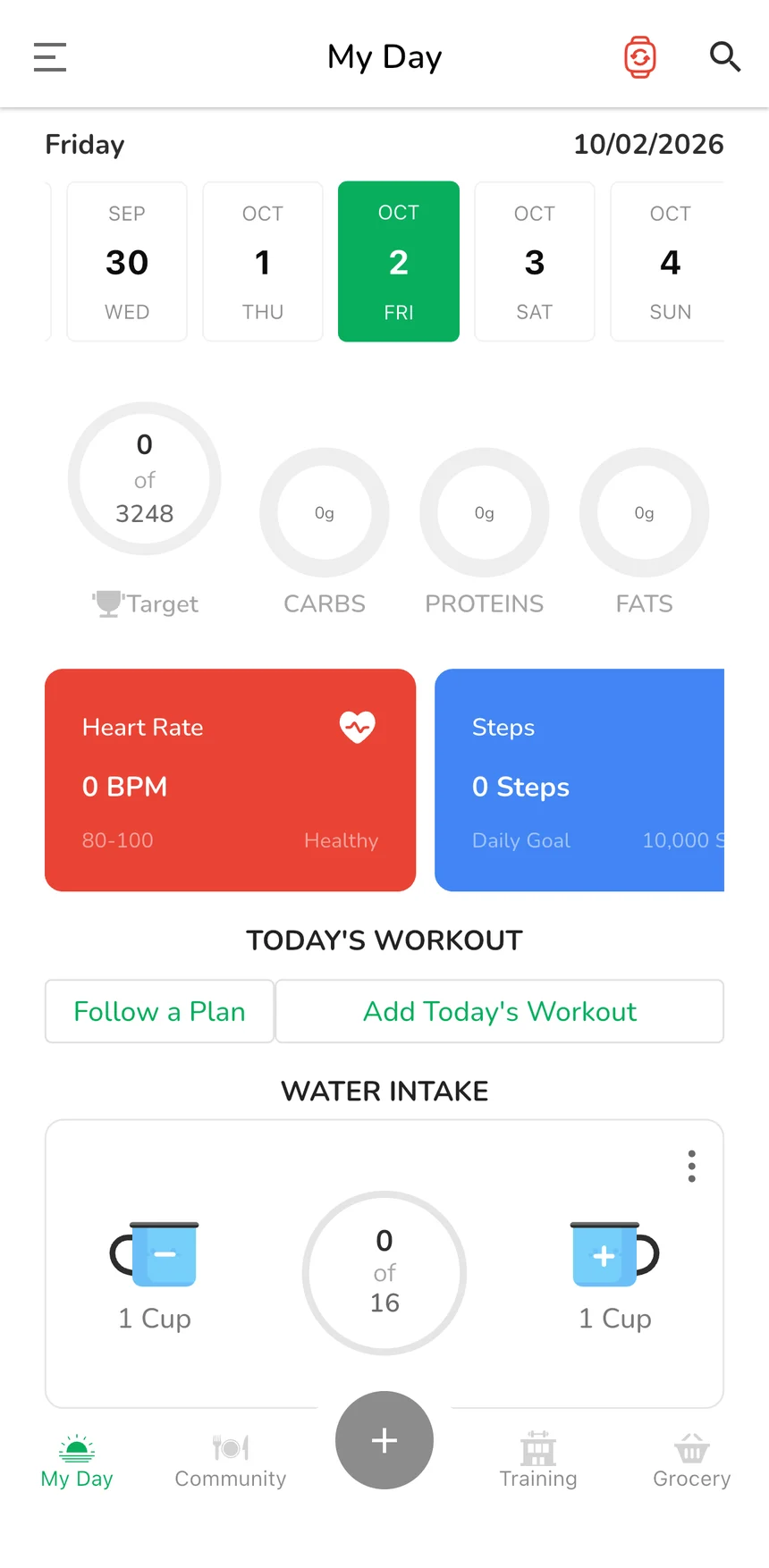
This plan works for one person or a whole office. The workplace version is further down, with scoring rules that are fair to people who don't already walk a lot.
How many steps is enough?
The best current evidence comes from a 2022 meta-analysis in The Lancet Public Health (Paluch et al.) that pooled 15 studies of 47,471 adults. More steps were linked to lower risk of death up to a point, and then the benefit leveled off:
| Age | Where the benefit leveled off |
|---|---|
| 60 and over | About 6,000 to 8,000 steps a day |
| Under 60 | About 8,000 to 10,000 steps a day |
You don't have to reach the plateau to benefit. In the same analysis, people averaging around 5,800 steps a day had a 40% lower risk than the lowest group (around 3,500 steps).
The 10,000 figure itself started as marketing. A Japanese pedometer sold in 1965 was called Manpo-kei, meaning "10,000 steps meter." When Harvard researcher I-Min Lee and colleagues studied 16,741 older women (JAMA Internal Medicine, 2019), the benefit leveled off at around 7,500 steps a day.
Pace matters too. The CDC counts brisk walking, about 2.5 mph or faster, as moderate activity, and it recommends 150 minutes of moderate activity a week plus muscle-strengthening on two days. The CDC's talk test is the easy check: at a brisk pace you can talk, but not sing.
Before you start
If you have heart disease, a high risk of it, or another chronic condition, the American Heart Association advises getting your doctor's okay before starting a new activity plan. The same goes for joint problems or recent injuries. Wear shoes that support your feet, and start with walks that feel doable, even 10 to 15 minutes.
Find your baseline
Wear your phone or tracker as usual for three normal days, ideally two workdays and one day off, and don't try to walk more. Average the three days. That's your baseline, and every target in the plan is built from it.
Example: 3,800 + 4,500 + 5,200 = 13,500, divided by 3 = a baseline of 4,500 steps.
The 4-week walking challenge plan
| Week | Daily step target | Brisk walks | Focus |
|---|---|---|---|
| 1 | Baseline + 1,000 | 3 walks of 10 min | Add one short walk a day: after lunch is easiest |
| 2 | Baseline + 2,000 | 3 walks of 15 min | Pick a regular time and route |
| 3 | Baseline + 3,000 | 4 walks of 20 min | Add one longer weekend walk |
| 4 | Baseline + 4,000 | 5 walks of 30 min | Five 30-minute brisk walks reaches the CDC's 150 minutes |
With the 4,500-step example, that's 5,500 in week one and 8,500 by week four. If your baseline is already above 8,000, keep the step target where it is and put the effort into the brisk walks instead.
Ways to add 1,000 steps without finding more time: walk during phone calls, park at the far end of the lot, take the stairs, do a 10-minute walk after dinner, or get off the bus a stop early.
Miss a day? Don't double up the next day. Carry on with the week's target. Missing one day matters far less than quitting.
What about the 6-6-6 walking challenge?
The 6-6-6 challenge that spread on social media is a 6-minute warm-up, a 60-minute walk and a 6-minute cool-down, at 6 a.m. or 6 p.m. Coverage of it so far is first-person accounts rather than studies. Seventy-two minutes a day is a big jump for someone starting at 4,000 steps. If it appeals to you, treat it as a goal for after week four rather than day one.
Running a walking challenge at work
A step challenge is one of the simplest workplace wellness activities, and the CDC's employer guidance lists walking clubs and competitions toward individual or team goals as a way to get people moving. The common mistake is ranking people by raw steps. The same three people win every time, and everyone else stops opening the leaderboard by week two.
Rules that keep more people in:
- Teams of four to six, mixed across departments, so people walk with colleagues they don't sit next to.
- Score improvement over each person's baseline, not total steps. Someone going from 3,000 to 6,000 has done more than someone going from 12,000 to 13,000.
- Count other activity. Agree a simple conversion (for example, a set number of steps per 10 minutes of cycling or swimming) so people with knee problems or a wheelchair can take part.
- Give points for consistency, such as a point for every day someone hits their own target, so a steady walker can beat a weekend binger.
- Run it for four weeks. Long enough to build a habit, short enough that people finish.
- Reward each week, not only at the end. Small, frequent rewards keep the middle weeks alive. The guide to employee wellness incentives covers which rewards work and the tax catch with cash and gift cards.
- Make it easy to join: walking meetings, a lunchtime group walk once a week, and managers who visibly take part.
Remote staff can join the same way, since everyone tracks on their own phone.
Keep it going after week 4
A CDC report on a six-week walking program for Montana state employees found activity went up during the program, but most of the gains had faded six months later. Plan for week five before the challenge ends:
- Keep your week-four target as your new normal instead of resetting.
- Keep one fixed walk on the calendar, the same time each week.
- Line up a next challenge a month or two later, such as a team distance goal or a new route.
- Keep a reward attached to the habit, not only to the contest.
Affili-Fit is built around that kind of ongoing reward. Completing daily goals earns Affili-Points that you redeem for offers from local businesses, so the reward keeps coming after the challenge ends. If you're running this for a team, the Affili-Fit employee wellness program adds community goals and local rewards. For other ways to get rewarded for moving, see apps that pay you to work out.
Common questions
How many steps a day should I aim for in a walking challenge?
Start from your current average and add about 1,000 a day each week. A 2022 Lancet Public Health meta-analysis found the mortality benefit leveled off around 6,000 to 8,000 steps a day for adults 60 and over, and 8,000 to 10,000 for younger adults.
What is the 6-6-6 walking challenge?
A viral routine of a 6-minute warm-up, a 60-minute walk and a 6-minute cool-down, at 6 a.m. or 6 p.m. It's a lot of walking for a beginner; build up to it.
How do you set up a walking challenge at work?
Use teams of four to six, score improvement over each person's baseline rather than raw steps, count other activity as step equivalents, run it for four weeks, and give small rewards each week.
Is 10,000 steps a day necessary?
No. The number comes from the name of a 1960s Japanese pedometer. Research on older women found benefits leveling off around 7,500 steps a day.
Keep reading
- Apps that pay you to work outHow Affili-Fit turns daily goals into rewards from local businesses.
- Health and Fitness Affiliate Programs Worth Joining (Rates Checked November 2026)Commission rates, cookie windows and networks for well-known health and fitness affiliate programs, read from each program's own page, plus the FTC disclosure rules and how to pick programs your audience will use.
- 7-Day High Protein Meal Plan (With Protein Totals for Every Day)Seven days of breakfasts, lunches, dinners and snacks with the protein added up for every meal, a target table by body weight, vegetarian swaps and a two-session prep plan.